Tuesday, August 30, 2011

More A to Z

It's been a while, but here are H, I and J in the A to Z of sports projects.

Horse Riding


Ice Skating

I like this one. Tracy wondered why I texted her to ask if we had any glitter, but now it all makes sense...doesn't it?


Javelin
On the day when it let down Jess Ennis at the World Championships. She should have taken a look at this - good technique.

Friday, June 17, 2011

Berlin - Day 2

Saturday morning - we awoke to grey East German skies. I say "we". By now, my brother had joined me in Berlin as I was here for the Marathon. The grey skies were something of a relief for me, as I hoped that the weather would cool off from Friday's sunny warmth. We went out early, on our way to Charlottenburg and its palace, where Rich was taking my place in the 6km Breakfast Run. From right in front of Schloss Charlottenburg, the course made its 6km way to the Olympic Stadium, home of the Games in 1936.
Berlin's Olympic Stadium
Rich and I arrived at a similar time, and I spotted him down on the blue track and went to meet him. We climbed the steps, pausing to take in a view of the 70,000 seater stadium. Moving to the outside of the beautiful venue, we went to the "Marathon Gate", an opening at the end of the stadium that provided the link between the stadium and the parade ground, where Hitler presided over the opening ceremony.

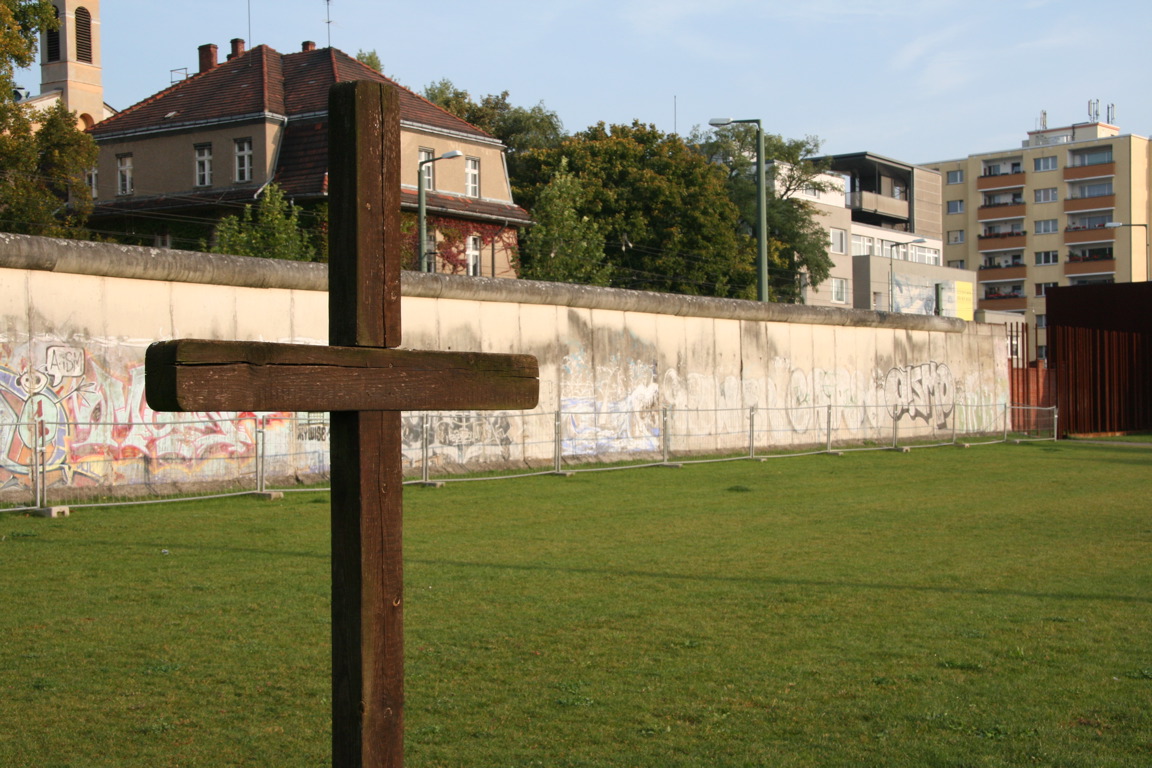
As 10,000 runners made their way back the city, we endured a stifling, sweaty train ride to Potsdamerplatz. The fresh air was welcome as we emerged from the U-bahn and began to walk the 850m or so to the Brandenburg Gate. Passing some pieces of the Wall - which are dotted around various locations in the city - our next stop of significance was the Holocaust Memorial. Certainly, a stop of real significance.
Holocaust Memorial
Here, large grey blocks of concrete rise up in regimented rows, but at different heights, marking the colossal number of lives stolen by Hitler's Third Reich. While this is the memorial to the Murdered Jews of Europe, and the 6 million Jewish lives lost is always the headline figure that catches the attention, the area also pays tribute to those who were persecuted for their sexual orientation. Thinking of those - black, Jewish, homosexual - who didnt' fit the blond-haired, blue eyed ideal of the Aryan Race, made me cast my mind back to the Olympic Stadium, where under the Fuhrer's gaze, Jesse Owens showed just how 'inferior' his race was by winning 3 gold medals.

Onward, we went to the Brandenburg Gate, and my first glimpse of the business end of the marathon course. The Gate itself is a majestic construction that has defined this area of the city since 1791. It took on additional significance for me that weekend, as it signalled 400m to go to the finish, and point at which I hoped to still have enough left to mount a sprint finish.
The Brandenburg Gate
We stopped here for lunch - my first bratwurst and some curiously curry flavoured ketchup, then set off back to the hotel, via Checkpoint Charlie.

That evening, Rich and I left the hotel to make a short journey to Ostbahnhof and the East Side Gallery. This is a 1.3km stretch of the Wall that remains in situ, following re-unification. In 1989, various international artists were invited to paint their message to the world on the grey concrete canvas. Following restoration in 2009 on the 20th anniversary of the fall of the Wall, it still provides a vibrant display of outdoor artwork.


Selections from the East Side Gallery
 To get back, we boarded the train to Spandau, a trip that could have ended quite differently had we done the same thing between 1939-45. With relief, we were let off at Alexanderplatz, where we made for the Ristorante Linosa. It was busy. The owner must love the Saturday night before the marathon. Other restaurants around the Alex were comparatively empty, while this one burst at the seams with pasta-guzzling marathon hopefuls.

Bread, a huge bowl of pasta and 2 slices of pizza later, I was ready for rolling back to the hotel, as my legs were already feeling carb-heavy. Sleep - and the anticipation of a good day ahead tomorrow.

Thursday, June 16, 2011

(Re) discovering Berlin

I say "re-discovering" Berlin, as we've recovered the photographs I took here last year, after our Mac's hard drive packed up. They're the smaller versions from an iPod, but still, it's great to have another look through them.

My first full day in Berlin was really interesting. Having arrived fairly late the previous night, I'd slept well, and left the hotel early after a good breakfast. I was staying in Mitte, just up the road from the famous Alexanderplatz - a large public space, host to the TV tower, the World Time Clock, and the largest demonstration in East German history in 1989.

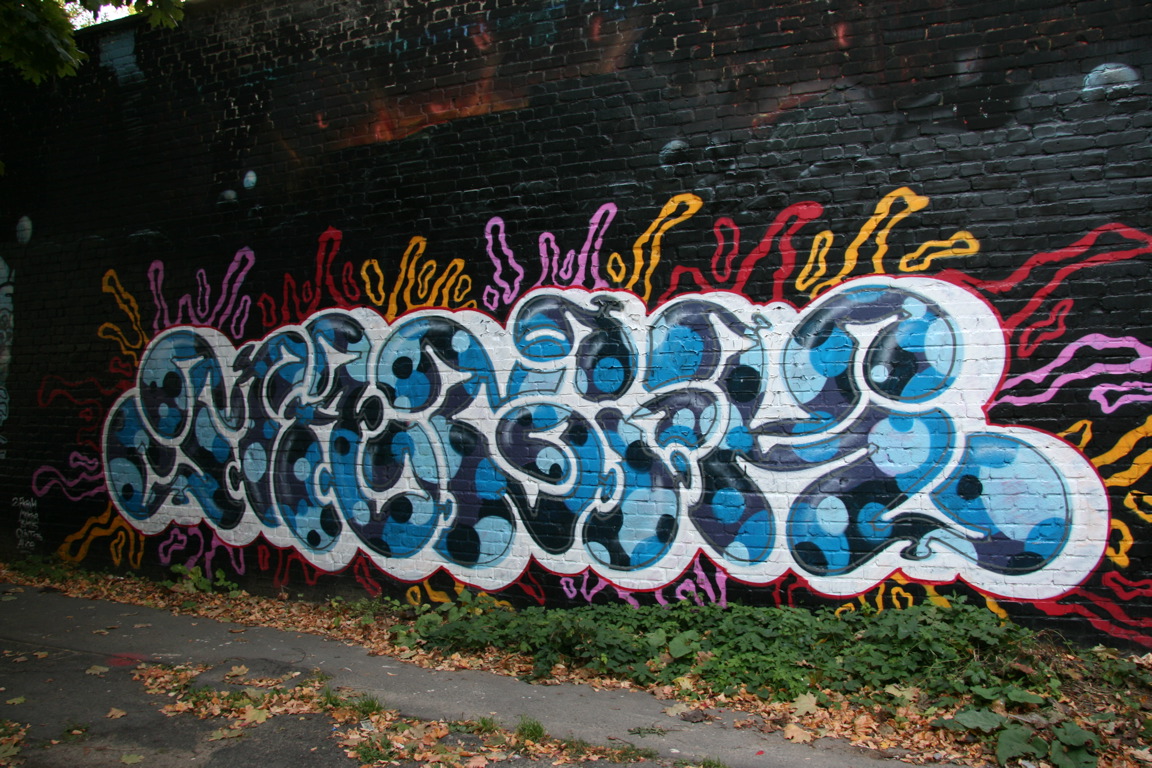
From here, I went in search of my first encounter of the remains of the Berlin Wall. Something struck me early on - there's so much graffiti in Berlin. And not just the unimaginative brand you get in the UK. There's some genuine talent behind some of this and perhaps, that's why quite a lot of it is left in place.
Graffiti in Mitte

 I made my way to Bernauer Strasse, the site of a remaining piece of the Berlin Wall, and also a preserved area of the 'Death Strip' that divided this city for nearly 30 years. These days, it serves as a memorial for those killed trying to escape to the West and a sort of outdoor museum, with information, other pieces of the Wall, evidence of the patrol roads and a watchtower. All of this offers just a glimpse of what this city must have been like just over 2 decades ago.

A memorial to the victims of the Wall
The Berlin Wall at Bernauer Strasse
As you weave in and out of the broken pieces of the remains of this barrier, it felt strange and uncomfortable to think that, not so long ago, such an act of freedom was nowhere near possible. Since 1961, anyone trying to make that journey from one side of the Wall to the other risked their lives in the face of the East German shoot to kill policy. It's quite hard to comprehend what it must have been like to walk along the western side of the Wall, knowing that you could probably shout to someone in the East, only 50m away, and knowing you enjoyed a freedom they only dreamed of.

I moved on to find another significant relic of the Cold War era - Checkpoint Charlie. Emerging from Kochstrasse U-bahn station brings you face to face with the most famous of the Iron Curtain's crossing points. There's not much left now - a small sentry hut and a sign telling  you that you are leaving the American Zone. This sign has an interesting effect, reminding me that, although the brutality and repression was made in the GDR, this division of the city was a product of an Allied plan to carve up the city.

To think these divisions remained in place for 45 years is sobering, and I wonder if the deal made by Churchill, Stalin and Roosevelt at Yalta ever intended such a long and lasting impact on the city.

Checkpoint Charlie

It's a frivolous shadow of its former self these days. Costumed guards pose for photos with eager tourists and the 'entrepreneurs' look to make a fast buck by selling replica East German medals and soldiers hats. You can even get your passport stamped as you cross the 'border'.

From here, I made my way to Prinz Albrecht Strasse (now renamed Niederkirchnerstrasse). Its original name would have struck fear into the hearts of any German during the Third Reich. The former home of the Gestapo now lies in ruins, only the cellars and the basements still evident among the rubble. Here too, a section of the Wall remains, a further reminder of former divisions.

The Wall at Prinz Albrecht Strasse
Close by is the site of Hitler's Bunker, now a piece of parkland, following demolition of the original building by the Russians. Just a sign marks the spot, giving information about the place where the Fuhrer took his last cowardly breaths.

I finished my day back at Alexanderplatz. The square itself is now a popular shopping area, but its quite barren concrete appearance reminds you that this was once well and truly East Germany. While a mile or two down the road, Unter den Linden is home to impressive Embassy buildings and the Brandenburg Gate, the Alex and the surrounding areas are grey, uniform and dull, save for the flashes of graffiti that punctuate the gloom.


I ate, and headed back to the hotel. My trip back was interrupted by a crew of b-boys putting on an impressive and funny show of breakdancing in the square. Scenes from 'Titanic' were coupled with incredible gymnastic feats, great strength and talent. A good way to finish my first day in Berlin.

Wednesday, May 18, 2011

A-Z

For a few months now, I've been taking part in a project with some folks at work called 2011 A-Z. The idea is to take 26 photos, beginning with each letter of the alphabet, over the course of 2011. That's a photo every 2 weeks. They have to be in order, and the photo has to be specifically taken for the project. Aside from that, there are no rules...

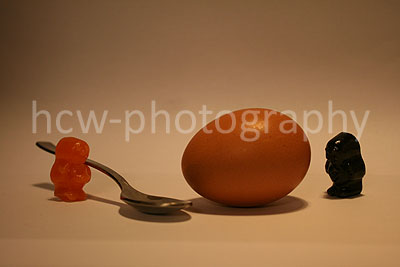
A while back, I took some photos of Jelly Babies, so I thought I'd pick that theme up again, and now I'm embroiled in a challenge to create a Jelly Baby A-Z of sports.

Most of the letters are fine, but if anyone's got suggestions for 'X' and 'Z'...

For now, here's A-G...


Sunday, May 1, 2011

Royal Celebrations

We rounded a week off in Yorkshire with a street party to celebrate the Royal Wedding. All in all, the day was really enjoyable. We'd watched the event itself on the TV, and it was good to see the sense of national unity for once, as 1 million people gathered in London to get a first hand look at the newly-weds.

From 3pm, Ilkley's own celebrations began with a party on the main street with food supplied by Betty's famous tea shop. The Town Cryer got things underway, with the Deputy Lord Lieutenant of West Yorkshire also in attendance.

The street was covered with Union Flag bunting, and kids scooted up and down on their scooters with flags blowing in the breeze. In typically Yorkshire fashion, entertainment was provided by a brass band, although a rather self-indulgent musical director killed the party mood slightly by asking for quiet while they played a piece from Saving Private Ryan.


Overall though, the atmosphere was a happy one. Betty's involvement was clearly popular, as the queue was a lengthy one for at least 3 hours. The party lasted for around 5 hours, and even as I headed home around 5.30, there were still revellers arriving to enjoy the festivities, picnics in hand.

It's not often we get to see this sense of national celebration, reserved usually for jubilees or war victories, so it was nice to have been a part of it.


Thursday, March 31, 2011

Back to the Ford Foundry

On my second visit to the old Ford Foundry, I had a much freer reign, and got around a much wider area. Walking into Mould Line 7 again, there was a fashion shoot in progress, which was part of the reason that there were two security guards on duty.

That made it less likely for there to be intruders removing the remaining copper from the site, although as I found this was by no means a guarantee. I made my way through to the back of the foundry, and into the 'Personnel' areas. Without any electricity on the site, this area is pitch black. I had a small torch in my camera bag, and it was enough to find my way into a couple of rooms.

There's very little there now. The rooms have been emptied or turned upside down, but I did get a shot down one of the light-less corridors before heading back to the light.


I headed outside and crossed the passageway to the canteen area. This was one of the main parts I was interested in seeing, but I didn't stop long. I grabbed a quick shot, and headed for the door. There was almost certainly someone else in there, and I didn't want to wait around to find out who. I later found out from the guards that there were people in there harvesting the copper pipes - while there were 10 other people on the site! Some people have no nerves.

I carried on, and climbed the steps on the outside and squeezed through a door, and found my way to a vantage point overlooking the main mould line area. The fashion shoot continued below, and the shafts of sunlight filtered through the gaps again. There are some interesting little things still hanging around here - a printer, with paper and data still hanging from it, a boot, a hard hat decorated like the England flag, a pneumatic drill - the general detritus of an industry long since wound up.

There are many brand new parts on the site too. I found may way through the 'Goods Inward' door, and while most of the parts shelves now lie empty, there are still filters and other parts sitting in their wrapping, never to fulfil their destiny of being part of a brand new Ford.

Finally, I took some shots of the exterior. Sadly, the moody looking clouds of the morning had cleared, so it didn't provide the perfect backdrop for the gritty exterior, but I did get the chance to get a shot of the thing that originally piqued my interest in the place. I was interested by a phone box that was tucked away in a gap between two buildings. I wondered what it was there for, and imagined people on the night shifts maybe calling home to say goodnight to their kids in the days before mobile phones.

I should manage another couple of visits to the site, and hopefully uncover a few more exciting parts of its past before the place is finally pulled down for good. The 'Demolition in Progress' signs are already up in parts, so time is running out.

Monday, March 7, 2011

Ford Foundry

Leamington's Ford Foundry closed about 4 years ago, taking with it hundreds of jobs and the heart of an iconic part of the town.

I've spent 10 years going back and to past that building, and recently, it's been sold and plans for development made public. Looking more closely at it now, I noticed small details that I'd never seen before - Quality Starts Here, Goods Inward, the red phone box in an alcove outside the building - and I began to think about the people that used to work there. The stories, the history, the livelihoods that were made there.

I wanted to get inside, so I made my enquiries and managed to set up a (legitimate) site visit. I know plenty of people have made their way in there by other means, but I wanted the luxury of a bit more time on the site to take in the atmosphere, as well as capturing it's last moments before demolition begins and it becomes Morrisons, or a hotel, or offices.

We arrived around 1pm, and once inside the gates, there was a palpable sense of excitement, waiting to get inside to shoot. Graham, security guard (and our guide) took us into the main area - No.7 Mould Line. The floor is grimy and slippery, but the sun was shining outside and from cracks in the roof, shafts of light illuminated the floor and created an eerie feeling in the building.

Looking around, it seems the upper level floors have been removed, so the height of the building is evident, and it's steel pillars create a picture not unlike the nave of a cathedral.


We wandered through the derelict space, looking for interesting angles, and at the same time, picking out the evidence of it's former glory. Signs still warn of 'High Voltage' and maintaining a safe speed, but the days are long since gone since anyone has driven a vehicle through there, or the building had any electricity.

The most interesting part for me was a room which was clearly home to some of the guys on the last day. Sprayed on the wall in red paint were the slogans "Goodbye Lads & All the Best" and "We Stood Together" - poignant reminders of the camaraderie of the men and women who worked there, and what the closing meant to them.

After a couple of hours, we had to leave the site. The security guard was on to his next job, although he perhaps should have been hanging around as an intruder was breaking in to continue stealing the copper that remains on the site.

I hope to return over the next few weeks. We've seen the main working part. I really hope to see the canteens, and places where those men who had written on the walls spent their breaks, to really bring to life the stories of the real people who were in that factory day in and day out.